
Demystifying “High-Quality Management” in Habitational Insurance: What Carriers Actually Want to See

If you’ve tried placing a multi-family or habitational schedule recently, you’ve undoubtedly seen the underwriter’s notes come back with variations of the same phrase: “Requires high-quality management.”
In a volatile property and casualty market, carriers are no longer just underwriting the bricks, mortar, and loss runs. They are underwriting the human infrastructure running the asset.
But what does "high-quality management" actually mean in practice? And more importantly, how do you prove it to an underwriter to get a risk bound?
Here is a look at what actually goes into high-quality management from a Property & Casualty perspective, and how a well-structured organization mitigates risk where most issues: at the property level.
1. The Vertically Integrated Management Stack
Underwriters look for a well-built, vertically integrated organization with controls in place across the entire management stack. They want to see clear layers of operational oversight:
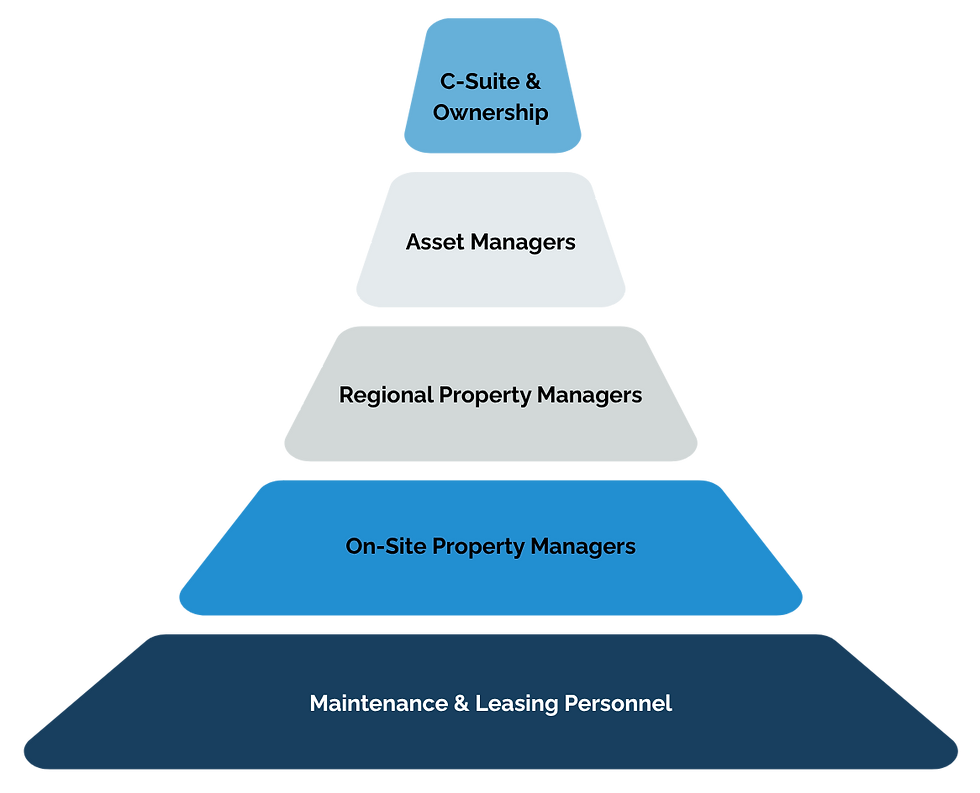
[ C-Suite / Ownership ]
↓
[ Asset Managers ]
↓
[ Regional Property Managers ]
↓
[ On-Site Property Managers ]
↓
[ Maintenance & Leasing Personnel ]
When an asset has layers of humans running it, it means there are checks and balances. A single-owner operator juggling 500 units from their cell phone is a red flag for a carrier. A structured stack means institutional control.
2. The Vulnerability at the Ground Level
The irony of habitational risk is that while the C-suite sets the strategy, the boots-on-the-ground personnel manage the highest amount of risk.

On-site property managers and maintenance crews are the frontline defense against massive insurance claims. Yet, this is a notoriously high-turnover, high-stress industry. Geographically diverse portfolios compound this issue. If ownership is in New York but the assets are scattered across the Sunbelt, oversight naturally thins out.
High-quality management acknowledges these vulnerabilities and builds distinct policies to control them:
The Maintenance Factor: High maintenance turnover leads to deferred maintenance. Deferred maintenance leads to claims. High-quality operators treat maintenance teams as critical risk-mitigation assets, ensuring routine inspections are completed and logged.
The On-Site Fraud Risk: Property manager employee dishonesty and theft are rampant industry problems. Carriers look for tight financial controls, regular audits, and zero-tolerance policies for cash handling to mitigate crime exposure.
Ground-Level Oversight: A broken sidewalk or a loose stair railing seems small, but it’s a six-figure trip-and-fall General Liability claim waiting to happen. High-quality management ensures daily property walks and a centralized system to flag and repair physical hazards immediately.
3. The "Swarm" Mentality: Triage and Emergency Response
You can have the best property in the world, but eventually, a crisis will hit. A pipe bursts, a main electrical line fails, or a fire breaks out. Underwriters look at how an organization responds to a crisis. Low-quality management lets a problem fester, turning a small incident into an astronomical claim, such as having to relocate an entire apartment complex for weeks because a vendor wasn't dispatched fast enough.
High-quality management possesses the ability to triage big-problem situations.
They employ a "swarm" mentality. When a severe issue arises, regional managers and senior leadership don't just send emails, they literally move in. They come on-site, live at the property if necessary, and command the situation until it is fully resolved. This level of operational agility mitigates damage, manages tenant relations on the ground, and keeps a bad day from turning into an insurance catastrophe.
A View From the Trenches of Habitational Insurance
This operational philosophy isn't theoretical; it’s born out of real-world ownership experience. HabGen Insurance was founded by Ari Rosenblum, who entered the housing industry in 2001 as an investor, owner, and property manager, overseeing the management of more than $400 million in equity over the past two decades.
Ari recalls a striking example of how a broken management stack can turn a minor physical defect into an existential crisis for a property:
"People often assume major insurance losses only come from massive natural disasters, but a breakdown in the ground-level management stack can be just as destructive.
I once saw a situation where a crack formed on the concrete stairs of a property's emergency exit. The on-site property manager saw it, didn't understand the severity, and kicked the bucket down the road, figuring they’d handle it during next quarter's budget.
Shortly after, the local municipality conducted a surprise inspection. They flagged the compromised egress, deemed the entire building structurally unsafe and uninhabitable, and ordered an immediate evacuation.
What started as a standard maintenance repair instantly snowballed into a massive operational disaster resulting in unplanned tenant relocations, lost rental income, legal liabilities, and an astronomical business interruption claim. A high-quality management stack catches that red flag on day one, because regional managers are auditing the physical asset and a clear triage pipeline exists to swarm life-safety issues immediately before the city, or a catastrophic collapse, does it for you."
The Takeaway for Brokers
When you are submitting a habitational risk, underwriters look beyond ACORD forms and the SOV. We want the operational story.
Include a brief narrative on who manages the property, how they train their on-site staff, and what their emergency response protocol looks like. When you can prove the insured has control at every level of their organization and keeps a sharp eye out for red flags, you move your submission to the top of the underwriter's pile.
HabGen Insurance specializes in market-rate and student housing across the United States, offering General Liability & Property insurance. To learn more, contact us today.


Comments